



Why do showers feel so good?
Showers feel relaxing because warm water activates your body’s natural relaxation response, lowering stress hormones, easing muscle tension, and helping your mind slow down. When combined with steam and quiet, a shower becomes a powerful daily reset.
A relaxing shower can do more than rinse away the day. Warm water, soothing steam, and a calm bathroom environment can reduce stress, ease anxiety, improve sleep, and lift your mood.
Infographic: How Showers Help You Relax
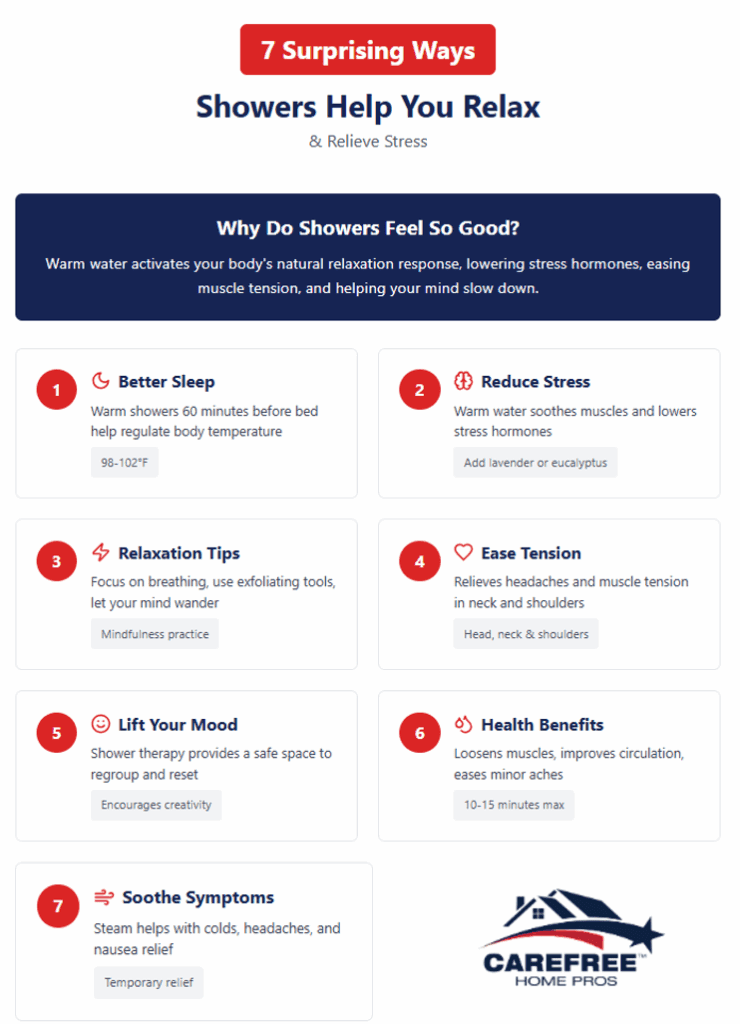
Here are seven ways to make your shower time truly restorative.
1. Warm showers help you sleep better
Do you ever step into a relaxing shower after a long day and instantly feel your shoulders drop? You’re not alone.
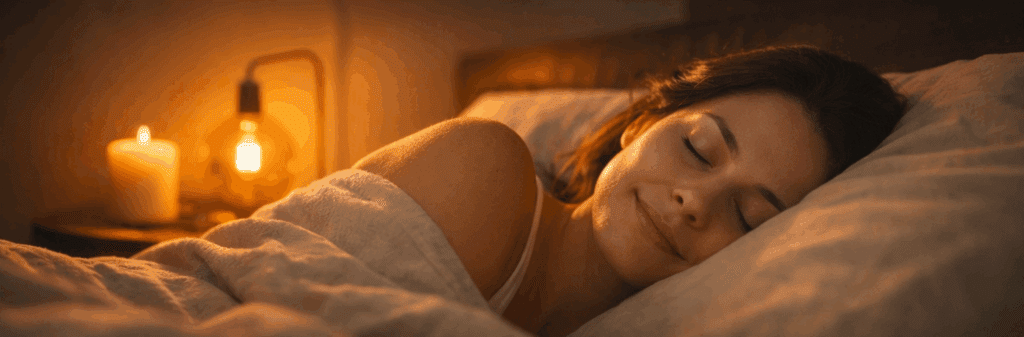
The ritual of a warm shower before bed prepares your body for deeper rest. According to sleep experts, immersing yourself in warm water 1 to 2 hours before bedtime helps regulate your core temperature and improves sleep quality.
Take a warm shower about 60 minutes before bed to help lower core body temperature and signal to your body it’s time to sleep.
Why are showers so relaxing?
The warm water raises skin temperature and encourages blood flow to your hands and feet, allowing heat to escape more quickly. As you cool down after you dry off, your body naturally eases into a drowsier state, making it easier to fall asleep.
Tip: Aim for lukewarm water about 98–102 °F. Too‑hot showers can leave you feeling wired instead of sleepy, while water that’s just warm enough signals your body that it’s time to wind down.
2. Showers feel good because they reduce stress
Wondering why showers feel so good? Part of the answer lies in how warm water relaxes your nervous system. When heated water hits your skin, it soothes muscle tension and helps lower stress hormones.
The steady stream of water also acts like a gentle massage, loosening tight spots in your neck, shoulders and back. Add in the white‑noise hum of running water and you’ve created a personal spa. No fancy equipment required.
Turn your bathroom into a therapeutic spa: Dim the lights, put on calming music and try an essential‑oil diffuser with lavender or eucalyptus to easily create a truly relaxing shower atmosphere.
3. How to relax in the shower
If you want to know how to relax in the shower, a few small tweaks can make a big difference:
- Focus on your breathing. Slow, deep breaths help signal to your body that it’s time to relax. Try counting to four as you inhale and four as you exhale.
- Play with temperature. While most people crave warmth in winter, briefly turning the water slightly cooler at the end of your shower can leave you feeling refreshed and invigorated.
- Use exfoliating tools. A soft brush or loofah stimulates circulation and feels like a mini massage.
- Let yourself daydream. The shower is one of the few places free of screens and interruptions. Let your mind wander, sometimes the best ideas come when you’re not trying too hard.
4. Warm showers ease headaches and muscle tension
If you suffer from tension headaches or simply carry stress on your neck and shoulders, a warm shower may bring relief. Medical News Today notes that warm water helps relax the muscles in the head, neck and shoulders and increases blood flow.
Warm showers may relax muscles around the head and neck, potentially easing tension headaches. Migraine symptoms can respond differently, and cooler water may help some individuals.
5. Shower therapy can lift your mood
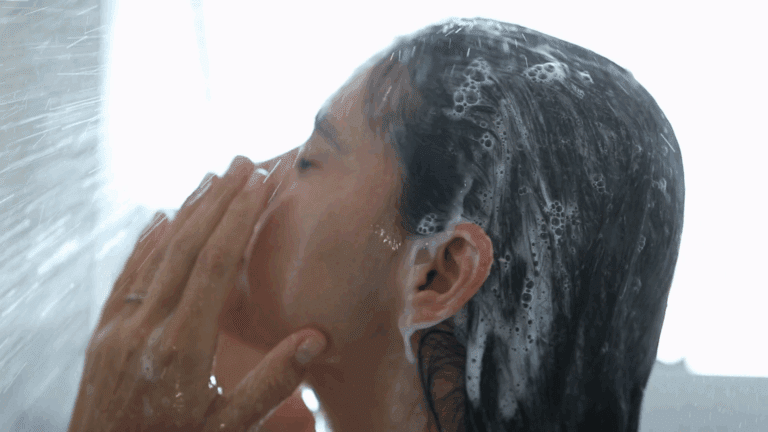
Shower therapy is an increasingly popular term on wellness blogs, and for good reason. Standing under a steady stream of warm water provides a safe space to regroup when you’re feeling overwhelmed.
The simple routine of shampooing, rinsing and repeating can act like mindfulness practice, helping you stay in the moment. And, that’s why people feel so relaxed after taking a shower.
However, a truly relaxing shower isn’t just about the water; it’s about your space and how you enhance it to make every day a little better. Modern walk-in showers, easy-to-clean walls, and slip-resistant floors can turn everyday routines into something you look forward to.
Many people also find that the solitude of the shower encourages creative thinking. Next time you’re stuck on a problem, hop into a hot shower and see what ideas surface.
6. Are hot showers good for you?
Yes, and of course in moderation. Hot showers loosen tight muscles, ease minor aches and pains and help clear stuffy noses. They can also improve circulation, which is why many athletes prefer warm showers or baths for recovery.
However, keep the water under 110 °F and limit your shower to 10 or 15 minutes to avoid drying out your skin. If you have sensitive skin or a heart condition, talk with a healthcare professional about your ideal temperature.
7. Warm showers can soothe colds, headaches and nausea
While a shower won’t cure the common cold or a hangover, warm steam can offer temporary relief. The moist air may help loosen mucus and ease sinus pressure, even though evidence for steam is limited, and the heat from a warm shower relaxes muscles, which can calm an upset stomach or tension headache.
On days when you’re feeling queasy, start with lukewarm water and adjust as needed. The comforting sensation often makes you feel more human again.
FAQs
Do showers help anxiety and relieve stress?
Absolutely. Warm water relaxes your body and helps lower stress levels, making you feel more at ease. The combination of heat, massage and privacy can bring emotional relief.
Are hot showers good for you?
In moderation. They soothe muscles and can help you sleep but keep the temperature under 110 °F and avoid very long showers to protect your skin.
Do hot showers help with colds?
They can relieve congestion temporarily but don’t cure a cold.
Do showers help with nausea?
Warm showers may help relax tense stomach muscles and calm nerves, making some people feel less nauseous. If nausea is severe or persistent, consult a healthcare professional.
Is it better to take a cold or hot shower?
In winter, most people find hot showers more relaxing. If you need an energy boost, finish quickly with a cool rinse. Listen to your body and choose the temperature that suits your mood and health.
How do you take a relaxing shower?
To take a relaxing shower, start by setting the water to a warm temperature that’s not too hot or too cold. Warm water helps your muscles loosen up and signals your body to slow down.
Dim the lights, if possible, play calming music, and take a few deep breaths while the water runs over your shoulders. Simple touches like steam, a favorite scent, or even just extra time without distractions can turn a regular shower into a relaxing routine that helps relieve stress and clear your mind.
Ready to upgrade your shower experience?
If your current bathroom doesn’t feel like the sanctuary you deserve, a remodel might be the answer. Carefree Home Pros can help you design a modern, easy‑to‑clean shower with features like rainfall showerheads and built‑in seats.
It’s amazing how a simple upgrade can transform your daily routine into a relaxing shower experience. Contact us today to schedule a free consultation and discover how a one‑day bath remodel can make every relaxing shower feel like a trip to the spa.