



If your bathtub looks worn, stained or outdated, you have a few options:
- install a bathtub liner
- refinish the surface
- replace the tub entirely
- convert it into a walk-in shower
Each option has distinct costs, timelines and benefits. This guide explores the pros and cons of bathtub liners, compares them to full replacements and introduces tub-to-shower conversions as a modern alternative for homeowners.
What Is a Bathtub Liner?
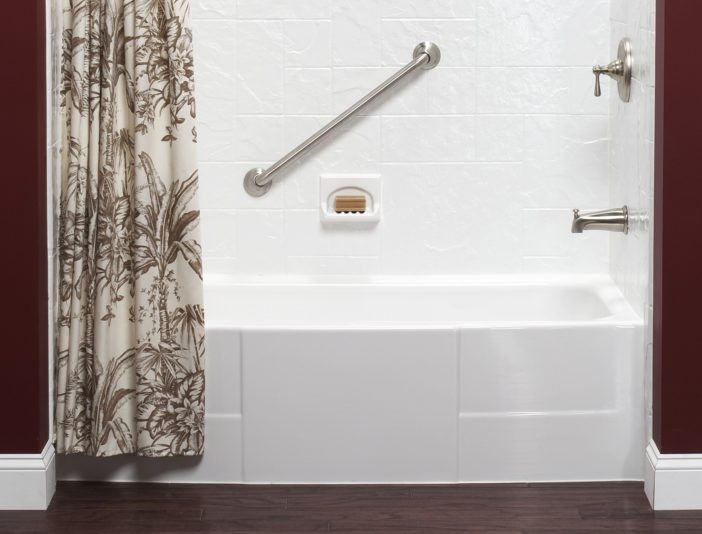
A bathtub liner is a custom-molded acrylic or PVC shell that fits over your existing tub and sometimes the surrounding walls. Professionals measure your tub, fabricate a liner and glue it into place. Angi notes three liner materials: PVC (affordable but can yellow), acrylic (more attractive but can crack), and solid-surface liners (most durable and visually appealing, but also the most expensive).
Pros of Bathtub Liners
- Lower upfront cost: A liner alone may cost $850–$1,400 and standard installation runs $1,700–$2,500. For comparison, a high-end liner install can reach $10,150, but most fall on the lower end.
- Fast installation & minimal mess: Liners can be installed in a day or two since there’s no major demolition.
- No major plumbing changes: Because the existing tub remains, there’s little need to reroute plumbing.
- Durable, non-porous surfaces: Acrylic liners are non-porous and resist staining; they often include non-skid surfaces and can accept accessories such as grab bars.
Cons of Bathtub Liners
- Traps moisture & mold risk: Water can get between the liner and original tub if not installed correctly by trusted professionals, creating a breeding ground for mold and mildew.
- Doesn’t fix underlying issues: Liners hide cracks or rust but don’t repair structural problems; water damage may worsen over time if not taken into consideration during install.
- Not suitable for all tubs: Liners won’t adhere well to fiberglass, acrylic or certain free-standing tubs.
Table: Bathtub Liner Cost & Lifespan Compared to Other Options
| Option | Typical cost range | Installation time | Longevity | Mess/disruption | Mold risk |
| Bathtub liner | $1,700–$2,500 installed; liner alone $850–$1,400 | 1–2 days | 5–15 years | Low (minimal demolition) | Moderate – moisture can get trapped between liner and tub |
| Refinishing (reglazing) | $300–$1,000 (depends on size and material) | 1 day | 3–5 years | Low | Low |
| Full tub replacement | $3,000–$6,000 for a new tub (CareFree pricing); can exceed $10,000 with custom materials | 2 days (CareFree) | Lifetime | Moderate – requires demolition | Low – underlying issues are repaired |
| Tub-to-shower conversion | $6,000–$12,000 (CareFree); nationally $1,200–$8,000 | 1 day | Lifetime | Moderate | Low – conversion includes new waterproofing |
Bathtub Liner vs Full Replacement
When a Liner May Work
A tub liner is appropriate when the existing bathtub is structurally sound, and you want a quick, budget-friendly face-lift. It offers a fresh surface without tearing out walls or floors and may be a good interim solution for a guest bathroom.
Why Replacement Is Often Better
- Long-term fix: A full replacement solves underlying problems, including leaks, rust and subfloor damage.
- Prevents water damage: Water trapped between a liner and tub can lead to mold, mildew and even structural issues. Replacing the tub eliminates this risk.
- Design freedom: A new tub lets you choose any size, shape or material from freestanding soaker tubs to walk-in tubs with unlimited colors and patterns.
- Better value: After factoring in labor and material costs, the price gap between a liner and new tub is smaller than many expect. New tubs come with longer warranties and last decades.
Alternatives: Tub-to-Shower Conversion
If you rarely take baths or have mobility concerns, converting the tub into a walk-in shower may provide the best of both worlds. CareFree Home Pros can remove your old tub and install a custom shower—often in one day. Benefits include:
- More space & accessibility: Walk-in showers offer an open layout and low threshold.
- Custom accessories: Add built-in shelving, seating, handheld wands and grab bars.
- Low maintenance: Acrylic showers resist mold and mildew, reducing cleaning time.
- Spa upgrades: Choose a Jacuzzi® shower with rainfall heads, body sprays and textured wall panels.
Cost & ROI
Tub-to-shower conversions cost $6,000–$12,000 locally and $1,200–$8,000 nationally, depending on materials and customization. Such conversions yield an average of 60% ROI and increase accessibility and modern appeal.
Infographic: Comparing Bath Upgrade Options
Bathtub Liner
Refinishing
Full Replacement
Tub to Shower
Why Choose CareFree Home Pros?
CareFree Home Pros offers multiple bathtub renovation solutions and helps homeowners decide between liners, replacements and conversions. Key advantages:
- One-day tub-to-shower conversions & fast tub replacements.
- Lifetime workmanship warranty & price-lock guarantee.
- Custom design options & accessories.
- Local expertise in CT & Western MA with financing and five-star service.
FAQs
How long do bathtub liners last? A quality liner typically lasts 5–15 years. Over time, liners may crack or lift, allowing moisture underneath.
Can a liner be installed over any tub? No. Liners generally cannot cover acrylic, fiberglass or certain freestanding tubs. A professional will inspect your tub’s material and condition before recommending a liner.
How much cheaper is a liner than a new tub? While liners have lower material costs, professional installation narrows the price gap. CareFree quotes $3,000–$6,000 for a new tub, while a standard liner installation costs $1,700–$2,500. Consider long-term durability and maintenance when comparing.
Is reglazing a good alternative? Reglazing costs $300–$1,000 and can freshen a tub for a few years. However, it won’t fix structural problems and may need to be redone sooner than other options.
Can I convert my tub into a shower? Yes. A tub-to-shower conversion can be completed in one day and costs $6,000–$12,000 locally. It’s a popular choice for homeowners seeking more space, improved safety and easier maintenance.